


Why Integrated Healthcare Matters More in Rural Communities
Living in a rural area often makes coordinating your own healthcare feel like a part-time job.
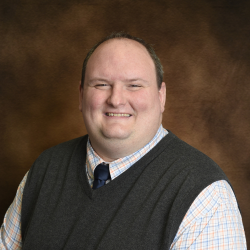
Darrin Nichols, MD, FAAFP, Chief Medical Officer & Family Medicine Physician
Getting care can mean long drives, multiple appointments, and repeating the same story over and over to different providers. As the Chief Medical Officer and a Family Medicine physician at Coplin Health Systems, I see how overwhelming this can feel for patients and families every day.
That’s why integrated healthcare matters so much.
Having Your Whole Team in Your Corner
I like to think of integrated healthcare as having all your people in your corner, working together as a team. Your primary care doctor, dentist, pharmacist, behavioral health counselor, and health educators all know your story, including your successes and challenges. They share knowledge and skills to ultimately offer you the best possible health outcomes.
At Coplin Health Systems, this is not a theory. It’s how we practice medicine every day.
Finding Healthcare in Rural Areas
In rural communities, patients often face what I call “healthcare isolation” in two important ways. First, there’s limited access to care in general. There may not be a specialist nearby, or there may be fewer options overall. Being able to take care of multiple facets of your health in one spot allows for better care in these situations.
The second type of isolation happens when healthcare services are offered through separate organizations, each with their own records and staff. This makes the care you receive feel disconnected, even when it’s available.
Add transportation into the mix, and the challenges grow even bigger. Transportation is one of, if not the largest, barriers to healthcare in rural areas. People living in rural communities have to travel farther for most things, healthcare included. If you need medical care, dental care, or help with your medications, that could mean three separate trips to three different towns.
It’s not just about gas money. It’s about taking time off from work, finding someone to watch the kids, or missing a day of pay. That stress alone can make people skip care altogether, and that’s when small problems turn into bigger ones.
When we bring multiple services together in one location, we remove that barrier. You can see your doctor, meet with a counselor, and pick up your prescriptions all in one trip. But integrated care goes even deeper than convenience. It’s about making sure everyone on your care team is actually talking to each other, working towards the same goals for your health.
Collaboration Strengthens Care
Provider shortages are a reality in rural communities, and they contribute to the rural health puzzle. At Coplin, our primary care providers work closely with pharmacists, educators, behavioral health counselors, dentists, and other team members to keep care local as long as possible. This integrated model allows providers to work together to find paths forward for patient care.
While this teamwork helps us cut down on referral delays, we acknowledge that they are sometimes necessary. We know there may be limited access to specialists close by, and wait times for them may be lengthy. But by keeping as much care as possible within our integrated team, we hope to reduce the delays and close gaps before they grow.
I’m especially proud of the work that our behavioral health team has done to improve access in our service areas. Mental health access certainly is challenging in rural areas. Limited access and the stigma surrounding behavioral health services often prevent people from seeking the help they need. By using the integrated approach, our team can identify concerns and offer support sooner, ensuring that mental health gets the same attention as physical health. It’s not a separate service you have to hunt down. It’s right here as part of your everyday care.
A Simpler, Smoother Experience for You
At the end of the day, integrated healthcare is about making your life easier. It means you don’t have to be your own case manager. Your providers communicate so you don’t have to repeat yourself constantly. It also means fewer appointments, less driving, and more trust that everyone involved actually knows what’s going on with your health.
In integrated models like Coplin Health Systems, your team is in your corner. We all share one common goal: keeping you as healthy as we can with all the support, evidence-based care, and cross-professional communication that comes with it.
And for rural communities, this approach is not just helpful; it is essential.
February 1, 2018
Coplin Welcomes Pediatric Physician
Dr. Cathy A. Dailey has joined our primary care staff as a pediatric physician. She is now seeing patients 18 and under at Parkersburg Family Care.
March 1, 2018
New Family Care Facility Opens in Parkersburg
Coplin Health Systems has opened a second family care clinic at 3705 Emerson Square in Parkersburg. For information, call 304.917.3530.
August 29, 2018
Coplin Health Systems Announces Departure of CEO, Derek Snyder, and Selection of Interim CEO
Coplin Health Systems and its Board are announcing that, effective September 7th, Derek Snyder, its CEO is departing the organization.